
April 2020 Book List - Corduroy's Shapes


Chances are if you have a toddler in your home, your little one is enjoying the April selection from Dolly Parton’s Imagination Library as much as this little cutie. 


Corduroy’s Shapes is a delightful book that explores shapes using bold colors, wonderfully textured outfits, and appealing rhymes. A snuggle up bedtime story routine is essential, but no need to save this one for bedtime.  With many of us now sheltering in place and being with our little ones all day, anytime is a good time to reach for a book.

Preschool teachers have long used books as a spring-board for play-based learning. With Corduroy’s Shapes, for example, why not have a Teddy Bear Picnic and make story-time a part of the activities. With this age group very little preparation is required.  Just grab a blanket or towel and some “shape themed” snacks – think round cheerios or banana slices, square or rectangular crackers, cheese cut into triangles or diamonds -- the possibilities are endless.  Of course, Teddy is invited and older siblings can join in the fun too.  The key is to keep it simple and keep your expectations in check. 
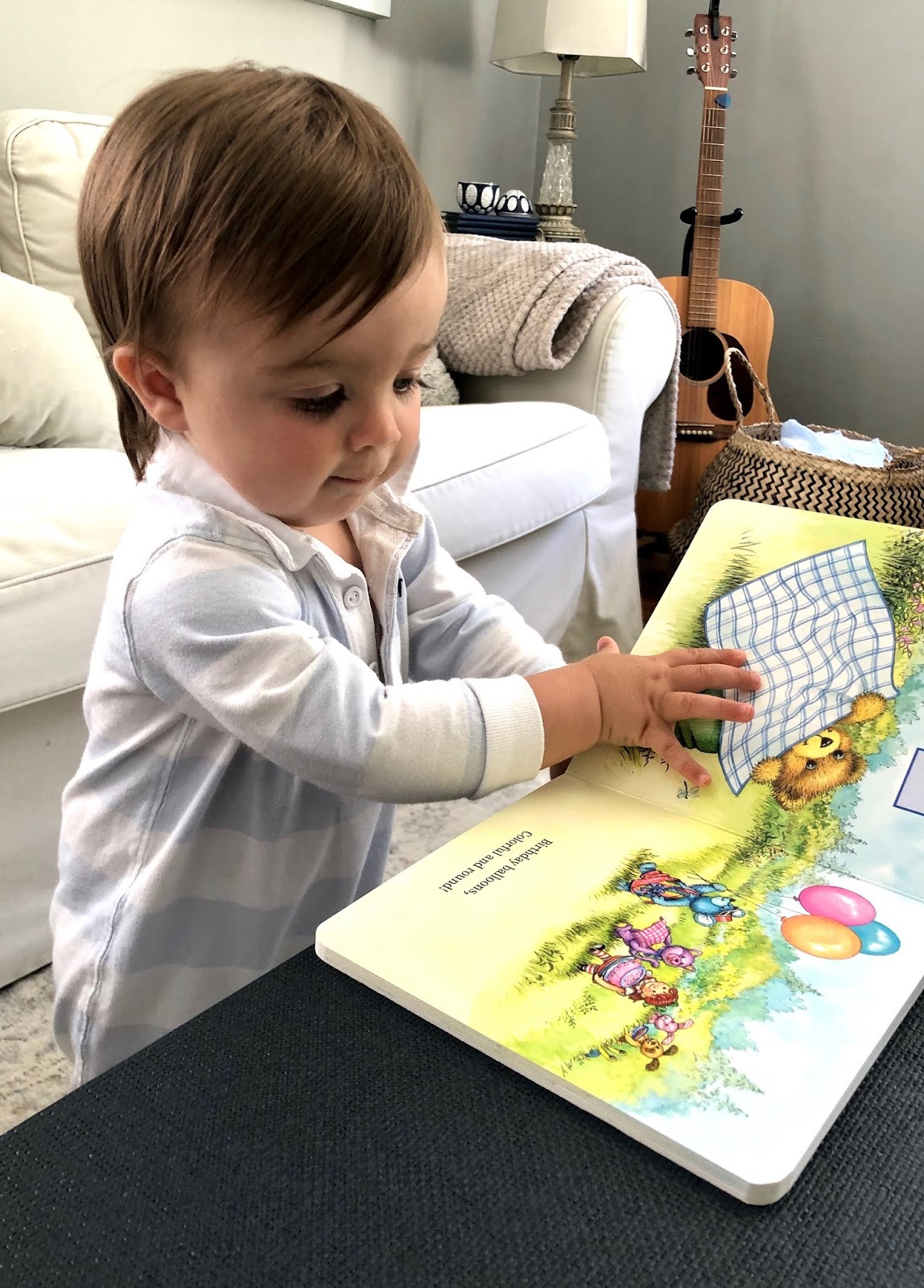
   

Commit to giving your toddler your undivided attention for however long you can spare and then just go with it. Don’t expect your toddler to sit through a story before reaching for a snack, and don't make too many corrections. So what if your toddler reaches for the triangular cheese slice while the page you are on is about circles? It’s just another learning opportunity. 

These moments are really about building positive associations around books and reading which ultimately leads to better learning outcomes. Keep it simple and just have fun. 

Check back often for more ways to support literacy development in engaging and non-stressful ways.

--

Caron Bell, PhD, Early Childhood Development, and beginwithbooks.org volunteer

Comments

Popular posts from this blog

The Best of the Best

The Imagination Library is Filled with Award-Winning Books  - Dolly Parton's Imagination Library (DPIL) prides itself on the quality of the books in its collection.  It is no surprise, therefore, that many award-winning titles, authors and illustrators are currently on their book lists, or have been over the years.  Read on to learn a little bit about the more prominent awards given out for children's literature in this country and the many award-winning books found on DPIL shelves. Newbery and Caldecott Awards The Newbery Medal , established in 1922, is the oldest children's book award in the world.  It is awarded annually by the American Library Association (ALA) to the author of the most distinguished contribution to American literature for children.  With its intent and long history, it continues to be the best known and most discussed children's book prize in the country.   Likewise, the Caldecott Medal is awarded annually by the ALA to the illu...

The WHY, WHEN, and HOW of Learning to Write

Unlike learning to talk, children need to be taught  to write.  It's not enough to see you writing for your child to learn all they need to know.  They not only need to be taught how to write, but also need to understand when and why  we write, and all the many forms that writing takes.  How do printed words "work"?  What are the "rules" or concepts of print ?  It will take your child several years to learn all of this, and of course, they will continue the learning well into the elementary school years and beyond.  However, there are many things you can do to help them get a head-start and be ready for kindergarten. WHY Your child needs to understand that writing is a way of saying on paper the things we otherwise think to ourselves or say out loud.  Letters on a page mean the same thing as words they have heard spoken.  As we rely more and more on our smartphones and tablets for simple writing tasks, we are no longer modelling writin...

Closing the Word Gap, One Story at a Time

The Word Gap? What is it and how do we go about closing it?  Perhaps you've heard it referred to as the 30-million word gap .  It's a catchphrase that's been circulating for years.  But what does it really mean? The phrase itself originated from a landmark study done over 25 years ago that compared the language development and reading achievement of children from different socioeconomic backgrounds.  The researchers observed a large group of 7-month-old babies for one hour per day for two and a half years, until the children reached three years old.  Everything the baby heard or said was recorded.  ALL words were counted, duplicates and all.  The results were shocking.  Youngsters growing up in more well-off homes heard 30-million more words over two and a half years than those living in poorer households.  They also heard these words in a more conversational style compared to children in less well-to-do homes.  There was also a stron...